Lessons
Lesson Time at Ziji
Picture how you would like your child’s entry into academics to be…engaging, inspiring, heart centered and rigorous.
Now imagine your child graduating from Ziji with their love of learning not only intact, but nourished. They are now young scholars, not afraid to work hard and to think and care deeply.
Children leave Ziji with a strong academic foundation without it coming at the expense of the full development of the self.
I really miss my new puppy! Except when I’m doing multiplication. I just love multiplication.
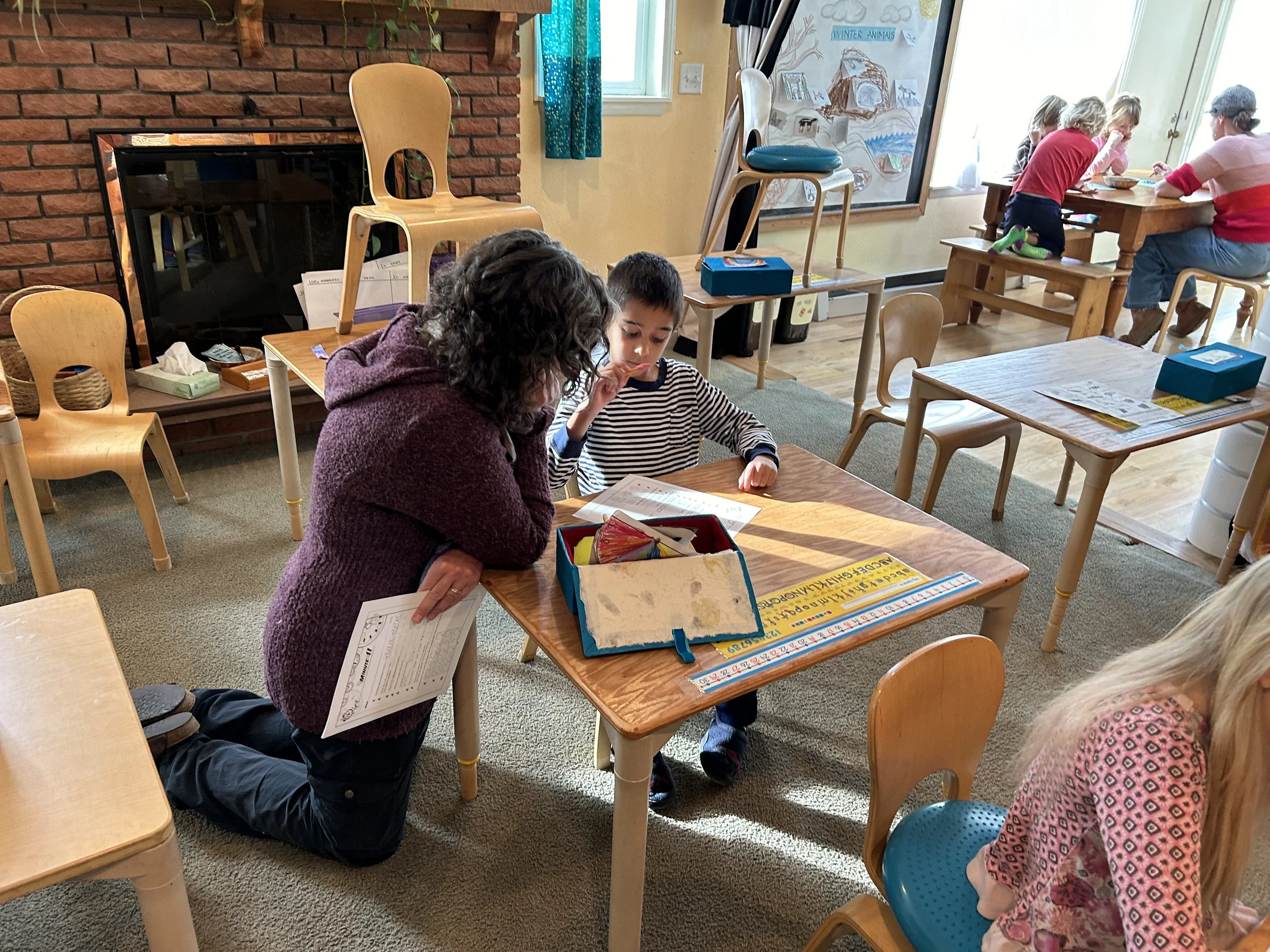
As a multiage school, all the children spend time together every day. The first and second graders come to Lesson three times a day. The morning Lesson begins with movement and progresses to math and ends with a short phonics exercise. After lunch, Lesson is a combination of handwriting, writing, and theme (science) work. End of day Lesson is reading time, independent reading and small group lessons.
Reading:
Our reading program is based on the science of reading, weaving together researched based programs. While we use the engaging and dynamic Letterland characters to introduce letters and sounds, Fundations is the backbone of our program. Phonological and phonemic practice with Heggerty complete the phonics aspect of our program. Independent reading time, storytelling, poetry, and reading comprehension round out our reading program. Children work in small groups and individually to ensure they have a solid foundation as they move at their own pace.
Writing:
Handwriting is introduced with the Handwriting Without Tears program. Through the Fundations program we work on grammar and spelling and sentence writing. Through narrative writing, the children are motivated to share their ideas and stories with their own writing and pictures. Woven into our thematic studies, children learn to research and share their learning through writing as well as hands-on projects. Learning to write down your own ideas and then edit your work for others to read is challenging work. The children find value in their work and by the end of second grade they have become dedicated workers and thinkers.
Math:
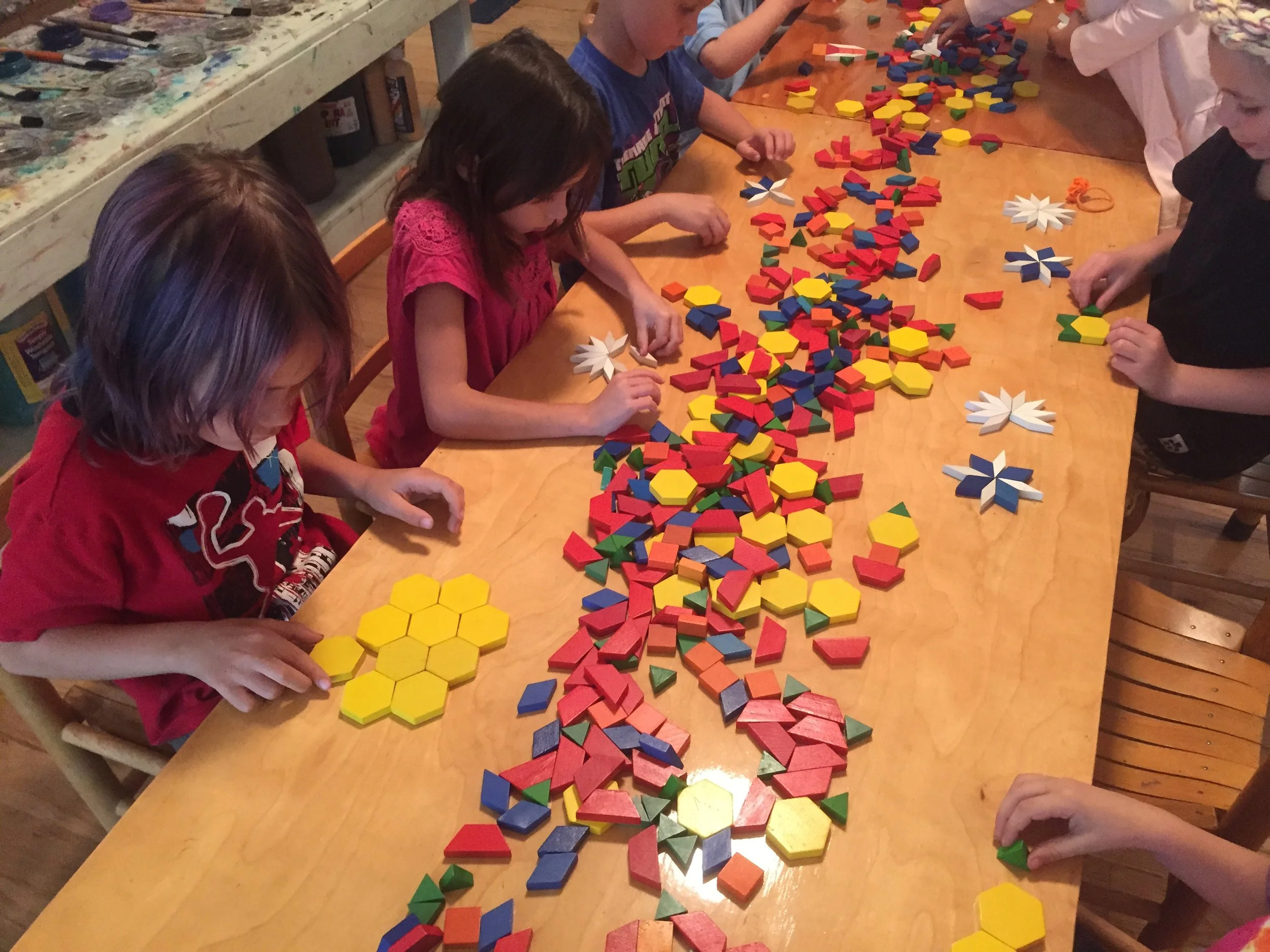
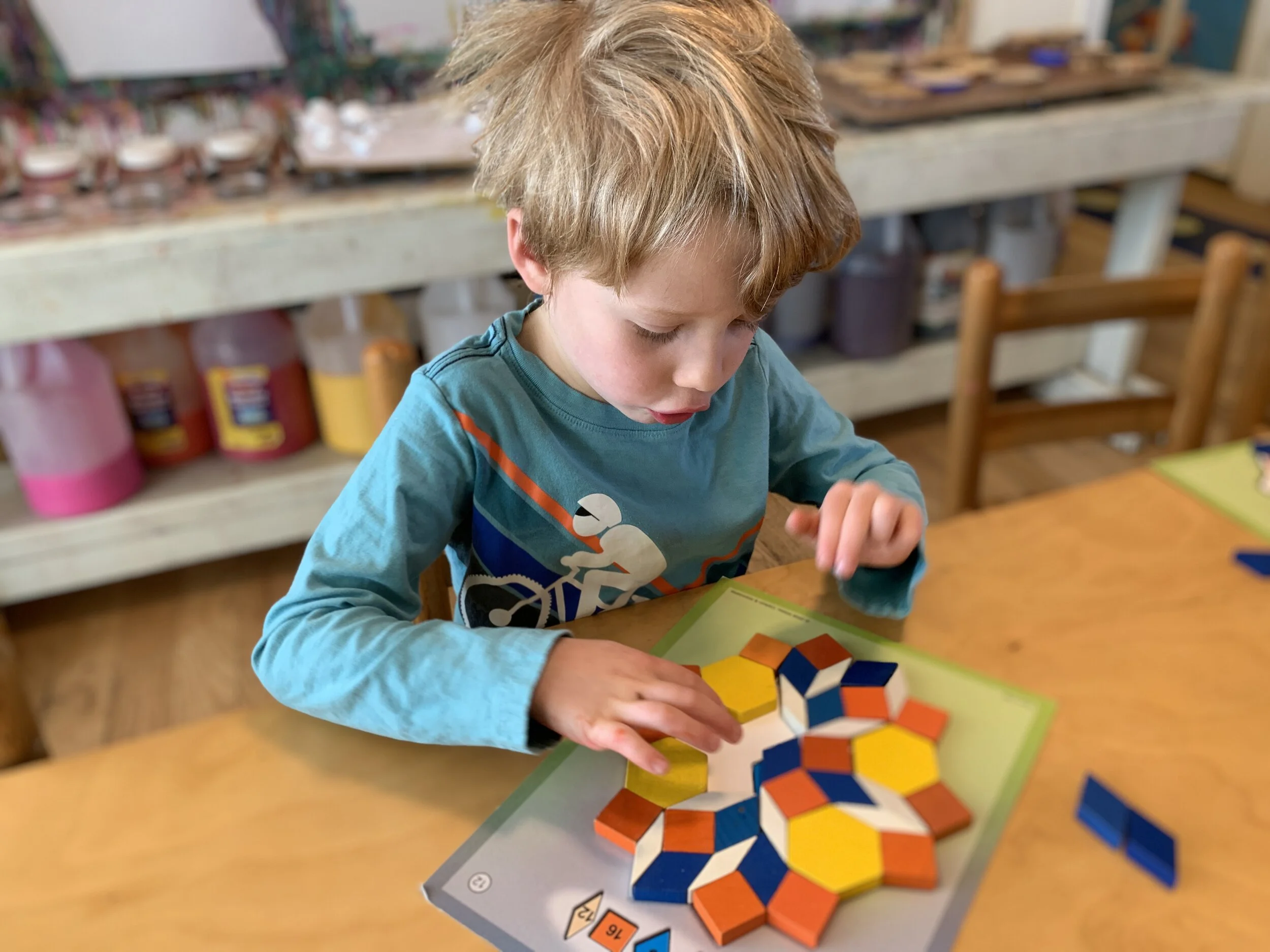
We begin math time with movement to wake up and activate the brain. We have a rich array of math manipulatives with which to create activities that teach and exercise each concept. Lesson time is active, concrete, and engaging. Children are encouraged to explain their thinking and to think about how numbers work, not just memorize math facts and procedures.
The development of flexible number sense is the foundation of our program. Early on, visual math plays a large role in developing number sense. Mental math and problem solving continue to expand their growing number sense. With a strong number sense foundation, learning new concepts doesn’t mean memorizing facts or procedures, but rather making connections with their mathematical understanding. In our classroom, mistakes are not seen as failures, but efforts at understanding, and doors into new learning. With our small class size, there is space and time for children to explore and follow their excitement.
Theme:
Our curriculum is grounded in our theme for the year that connects all subjects. Understanding how we are all interconnected through hands-on learning that inspires connection to self, others and the planet is at the heart of our thematic studies. We have a two year cycle that follows general guidelines with special studies each year that follow the children’s interests. Below is a basic outline of our thematic studies.
Year 1: In the Beginning
In The Beginning we start, well at the beginning. We look at the creation of our universe from the lens of how we belong and are connected to the origin of the universe. Through story, movement and art we move through space and time to reach the beginnings of our planet. We consider the beginnings of life and the evolution to dinosaurs. The children do a deeper dive into dinosaurs and create a multidimensional research project around a dinosaur of their choice.
Year 2: Animals
The animal theme actually begins with insects as we venture into our yard and explore what we see. Children observe, research and create their own insects. As our yard begins to change with the coming of Fall, children observe and record the changes as we move into a study of animals preparing for and then surviving Winter. As the days grow shorter and the night lengthens, we turn our explorations to nocturnal animals with a focus on bats and then owls. Our owl pellet dissections and skeleton recreation brings a few ewws, and lots of aahhs. We end the school year with the children picking a local animal for an in-depth exploration with a final project encompassing research, writing, and habitat boxes.